
Testing Guides
Warehouse Temperature Mapping: How Is It Done and How Many Sensors Do You Need?
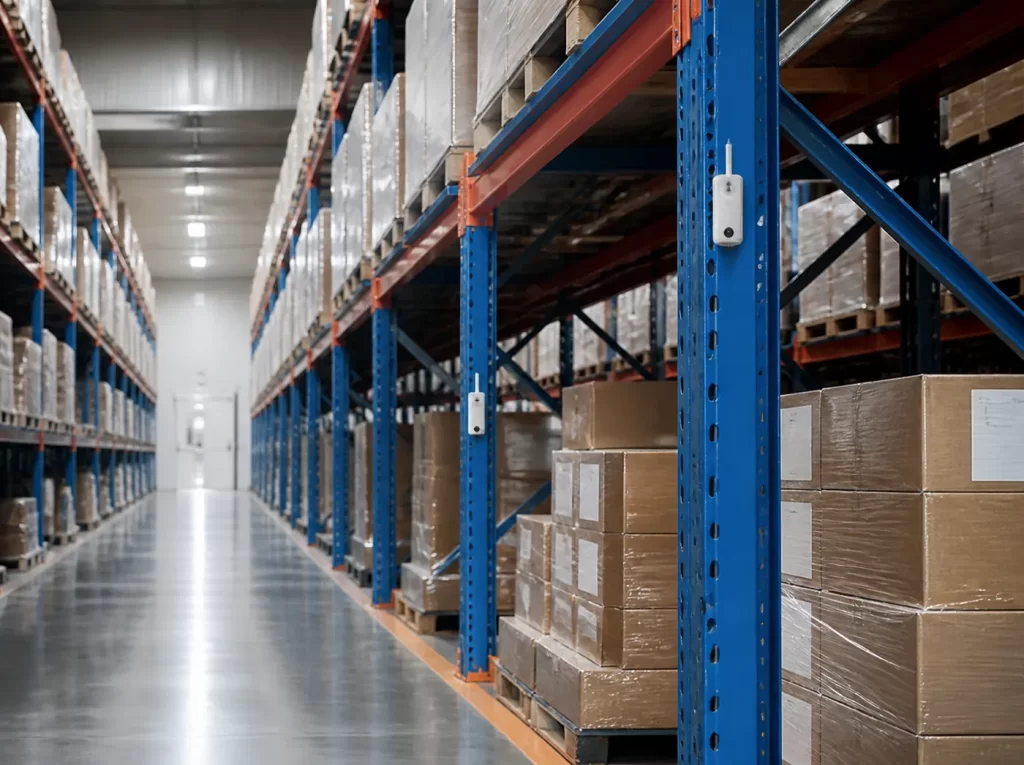
What is temperature mapping and when is it required?
Temperature mapping is a study of how temperature is distributed in a storage area. It shows the temperature profile across the area both empty and under normal loading, identifies zones where product should not be stored (for example near cooling coils, cold air streams or heat sources), and finds the right positions for monitoring sensors. The main reference is WHO Technical Report Series, No. 961, 2011, Annex 9: Model guidance for the storage and transport of time- and temperature-sensitive pharmaceutical products, Supplement 8: Temperature mapping of storage areas (May 2015).
Under Supplement 8, clause 1.1, every temperature-controlled storage area should be mapped before it is commissioned and put into use. It should be re-mapped after any significant modification and, depending on the routine monitoring strategy, periodically, for example every three years.
What does Thai law require?
The Ministry of Public Health Notification on criteria, methods and conditions for the distribution of modern medicines B.E. 2564 (2021; in force 1 January 2022), clause 3.3.2, requires a temperature mapping study of medicine storage areas before use, under conditions representative of actual storage. Temperature monitoring devices must be installed at the critical points identified by the study, and after any significant change the risk must be assessed and the mapping repeated.
Clause 9.4.4 also requires temperature mapping of the product compartment of temperature-controlled vehicles, taking seasonal temperature variation into account.
How many sensors do you need?
Supplement 8, clause 2.1, calls for a “sufficient number” of data loggers to show the full temperature distribution. Clause 2.2.6, step 5, recommends a risk-based approach together with these placement principles:
- Horizontal: a grid along the length and width of the area, every 5–10 m (up to 20–30 m in very large facilities), matched to where product is actually stored.
- Vertical, ceiling 3.6 m or lower: three stacked levels, high, medium and low, for example at floor level, 1.2 m and 3.0 m.
- Vertical, ceiling above 3.6 m: vertical arrays at the bottom, middle (several levels) and top, for example at 0.3, 1.8, 3.6 and 5.4 m in a 6 m high store.
Worked example: a 30 × 20 m store with a 3 m ceiling and 10 m spacing gives 4 rows along the length (0, 10, 20, 30 m) and 3 rows across the width (0, 10, 20 m), so 12 positions × 3 levels = 36 points. The count is then adjusted for the racking layout, air supply positions and heat sources recorded during the site survey (step 3).
How long should you record, and in how many seasons?
- Duration (clause 2.2.6, step 9): there is no fixed rule. Warehouses and ambient areas are typically recorded for at least 7 consecutive days, including 5 working days and 2 weekend days. Cold rooms and freezer rooms are typically recorded for 24–72 hours, or longer if justified.
- Seasons (clause 2.2.4): areas affected by seasonal changes may need mapping at least twice, in the hottest and coldest periods of the year. Cold rooms and freezer rooms generally do not need two-season mapping.
What are the steps?
- Survey the area: dimensions, racking layout, air supply positions and existing sensors.
- Write the protocol: acceptance criteria and the number and positions of data loggers.
- Place calibrated data loggers to the plan, horizontally and vertically.
- Record continuously for the defined period.
- Analyse the data to find hot spots, cold spots and any excursions.
- Report the results with temperature distribution maps and recommended monitoring sensor positions.
Frequently asked questions
Does WHO set a minimum number of sensors?
No fixed number. Supplement 8, clause 2.2.6, sets placement principles instead: a grid every 5–10 m and several heights.
How many days should mapping run?
Warehouses typically at least 7 consecutive days. Cold rooms and freezer rooms 24–72 hours.
Is temperature mapping required by Thai law?
Yes. The Ministry of Public Health notification on medicine distribution B.E. 2564, clause 3.3.2, requires it before a medicine storage area is used and again after significant changes.
References
- WHO Technical Report Series, No. 961, 2011, Annex 9: Model guidance for the storage and transport of time- and temperature-sensitive pharmaceutical products
- Supplement 8: Temperature mapping of storage areas (WHO, May 2015), clauses 1.1, 2.1, 2.2.4 and 2.2.6 (steps 3, 5 and 9)
- Thai Ministry of Public Health Notification on criteria, methods and conditions for the distribution of modern medicines B.E. 2564 (Royal Gazette, 21 May 2021), clauses 3.3.2 and 9.4.4
Have a question this article doesn’t answer?
Send us details of your room or system and our engineers will reply with a proposed scope.
Ask an engineer